


How to Identify Antique Glass Doorknobs
How to Tell if Your Glass Doorknobs Are Truly Antique
Antique glass doorknobs can be beautiful remnants of another era—but determining whether a set is genuinely antique takes more than a glance. Learn what to look for in the glass, hardware, construction, and details that can help with glass doorknob identification.
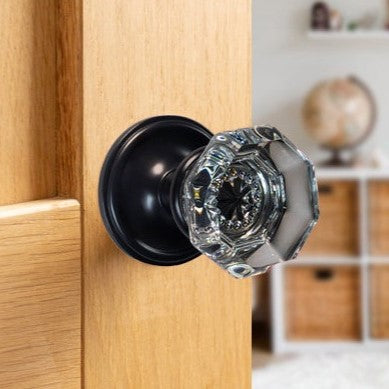
Explore the Identification Guide ↓There is something unmistakable about the way an old glass doorknob catches the light. Whether faceted like a jewel or softly rounded like a piece of sea glass, vintage glass door knobs have a character that is difficult to reproduce.
But appearance alone does not tell the entire story. Antique and reproduction glass doorknobs can look remarkably similar, especially when viewed online or from a distance. The best way to identify an older piece is to consider several clues together rather than relying on a single characteristic.
The shape of the glass, the way it was made, the mounting hardware, the finish, and even small imperfections can all provide useful clues.

5 Things to Examine When Identifying Glass Doorknobs
If you have inherited a set of knobs, discovered them at an architectural salvage shop, or are simply curious about hardware already installed in an older home, start with these five areas.
Look Closely at the Glass
Older glass can have subtle variations in clarity, color, and consistency. Look closely at the body of the knob rather than judging it from across the room.
Tiny bubbles, slight variations in the glass, or other characteristics associated with historic glassmaking may provide useful clues.
Study the Shape and Facets
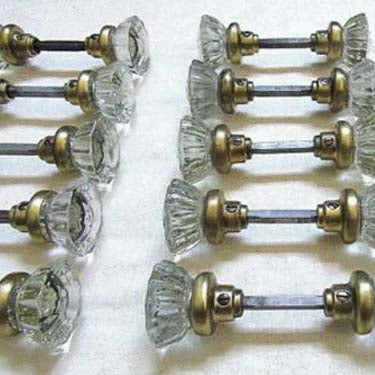
Cut and pressed glass appeared in many forms. Some antique glass doorknobs feature numerous facets that create a jewel-like appearance, while others have simpler rounded or oval profiles.
Pay attention to the symmetry, depth, and arrangement of the facets.
Inspect the Metal Hardware
Don't stop at the knob itself. Turn the set over and examine the rosette, spindle, screws, mounting plate, and other hardware.
The construction of the accompanying hardware can sometimes tell you as much about a piece as the glass does.
Check for Wear and Patina
Hardware that has been used for decades may show natural wear in areas that are frequently touched or tightened. Metal finishes can also develop patina over time.
However, artificially aged finishes exist, so patina should be treated as one clue—not definitive proof.
Consider the Construction
Examine how the knob, spindle, rosette, and other components fit together. Older hardware was produced using construction methods that can differ from those used in modern reproductions.
Look for signs of how the pieces were assembled rather than focusing solely on the decorative appearance.
Pressed Glass vs. Cut Glass: What's the Difference?
One of the more useful distinctions when examining antique glass doorknobs is understanding how the glass was shaped. Historically, different production techniques created different visual characteristics.
Pressed Glass
Molten glass was pressed into a mold to create the desired form and decorative pattern. This made it possible to produce detailed designs more efficiently.
Cut Glass
Cut glass was shaped and decorated by grinding or cutting the surface. The resulting facets can have a distinctive jewel-like quality.
Why It Matters
Understanding the construction method can help you compare an older piece with modern reproductions and better understand its appearance.

Don't mistake perfection for authenticity.
Modern manufacturing can create extremely consistent glass, while older manufacturing processes could produce subtle variations. At the same time, genuine antique hardware can also be remarkably well made. Small imperfections are therefore useful clues, but they should always be considered alongside construction, style, and hardware.
Common Glass Doorknob Identification Questions
A few details tend to generate the most questions when examining vintage glass door knobs. Open each section for a quick explanation.
No. Clear glass has been used in both historic and modern doorknobs. The shape, facets, manufacturing characteristics, hardware, and overall construction should all be considered.
Not by themselves. Bubbles can occur in older glass, but they are not an exclusive marker of age. Treat them as one observation among several rather than as a definitive test.
The terms are often used interchangeably in everyday descriptions, but they can describe different types of glass or glass-like material depending on the manufacturer and period. When identifying an existing knob, focus on its actual construction and characteristics rather than the name used in a listing.
Yes. Reproduction hardware is designed to recreate historic styles, and some reproductions can look convincingly aged. Examining the entire assembly is therefore more reliable than judging the knob based solely on its decorative style.
Reproduction hardware can be a practical option when you want a period-inspired appearance combined with new components and contemporary installation compatibility.
A Simple At-Home Inspection
You don't need specialized equipment to begin researching a set of antique glass doorknobs. A careful inspection in good natural light can reveal quite a bit.
- Remove the knob only if appropriate. If the hardware is currently installed and you are unsure how it comes apart, avoid forcing it. Photographing the installed hardware may be enough to begin your research.
- Examine the glass from several angles. Rotate the knob under natural or diffuse light and look for facets, variations, bubbles, scratches, and other characteristics.
- Inspect the rosette and mounting hardware. Look at the shape, finish, screw placement, spindle, and general construction.
- Compare the complete set. A doorknob should be considered as part of its entire assembly. Compare the knob, rosette, spindle, latch, and other components.
- Research the style and installation details. Once you've identified the physical characteristics, compare them with documented examples of hardware from the suspected period.
Love the Look of Historic Glass?
Whether you're restoring an older home or simply bringing a little vintage character into a newer space, glass hardware can add a subtle architectural detail without overwhelming the room.
Choosing Glass Hardware for a Period-Inspired Interior
Identification isn't only useful for collectors. Understanding historic glass hardware can also make it easier to select replacement or reproduction pieces for a restoration project.
Faceted glass can complement Victorian-inspired interiors, while simpler clear glass forms can work beautifully in Colonial Revival, Craftsman, cottage, farmhouse, and transitional spaces. The surrounding rosette and metal finish can change the character of the same basic glass knob considerably.
If you're replacing missing hardware, consider matching the overall proportions and architectural period rather than searching for an identical knob based only on color.
Continue Exploring Historic Hardware
Glass doorknobs are only one part of the story. Pairing the right knob with complementary rosettes, backplates, hinges, and other architectural hardware can help create a cohesive period-inspired look.
Door Rosettes & Backplates
Discover the decorative details that complete a door hardware set.
Explore Rosettes & Backplates →More Hardware Guides
Learn more about finishes, styles, installation, and historic architectural hardware.
Read More Guides →
```


Leave a comment