


Antique Door Hinges: Everything Homeowners Should Know

Antique Door Hinges Explained: Styles, Sizes & Restoration Tips
Door hinges may be one of the smallest pieces of hardware in a room, but the right hinge can make a surprisingly large difference in how a historic, traditional, or period-inspired door looks and functions.
When homeowners plan a restoration or renovation, attention naturally goes to the visible hardware: the doorknob, escutcheon, lock, or pull. Hinges are often an afterthought. That is unfortunate, because antique door hinges are both functional components and architectural details. Their size, shape, finish, corners, screw placement, and decorative finials can all influence whether a door feels genuinely appropriate to the period—or simply looks like a modern replacement.
Choosing the right hinge does not have to be complicated. Once you understand the basic terminology and a few measurements, it becomes much easier to narrow down the options. Whether you are replacing worn hardware on an older home, matching existing hinges, or adding period character to a new door, the same principles apply.
Why Door Hinges Matter More Than You Think
A typical interior door may have two or three hinges supporting it, which means the hinge is doing considerably more than providing a decorative accent. It supports the weight of the door, controls its movement, and helps maintain alignment between the door and jamb.
At the same time, hinges are often surprisingly visible. Open the door and the hinge leaf is immediately exposed. On a tall paneled door, double door, French door, or period-style entry, a decorative hinge can become an important part of the overall composition.
This is why replacing an old hinge with an inexpensive modern hinge can sometimes make an otherwise carefully restored room feel slightly "off." The function may be correct, but the proportions and detailing are not.
Understanding the Main Types of Antique Door Hinges
"Antique hinge" is a broad description rather than one specific hinge design. Traditional hinges are available in several configurations, and the best choice depends on the door, installation method, weight, existing mortises, and desired appearance.
Butt Hinges
Butt hinges are among the most familiar door hinge styles. Their two leaves meet together at the knuckle and are typically mortised into the door and jamb. Traditional butt hinges are available with square or radius corners and a variety of finishes.
Ball Tip Hinges
Ball tip hinges add a rounded finial to the hinge barrel, creating a more decorative appearance. They are particularly useful when restoring Victorian, late-19th-century, or other traditional interiors where a plain hinge would look too contemporary.
Finial Hinges
Ornate, acorn, steeple, urn, Windsor, and other finial styles allow the hinge to become a visible architectural accent. These are ideal when the hardware itself is intended to contribute to the character of the door.
Ball-Bearing Hinges
Ball-bearing hinges incorporate bearings into the hinge knuckle to provide smooth movement and help support heavier doors. They are a practical choice for substantial doors where durability and smooth operation are especially important.
What Is a Butt Hinge?
The term butt hinge describes a hinge where the leaves are mounted into the adjoining surfaces of the door and frame. When installed correctly, the hinge is partially or nearly completely recessed into the material, producing a clean and traditional appearance.
Butt hinges are especially common on interior doors because they are relatively unobtrusive while still offering a wide range of styles. The hinge can be simple and functional, or it can incorporate decorative finials that become visible when the door is open.
For restoration work, one of the most important considerations is not simply finding a hinge that "looks old." The replacement should also work with the existing mortise and screw pattern whenever possible.
Ball Tip Hinges: Small Detail, Big Difference
Among the easiest ways to give a traditional door more character is to choose ball tip hinges. Instead of ending in a simple flat barrel, the hinge incorporates a rounded ball-shaped finial.
The difference is subtle, but that is exactly why it works. Decorative hardware does not always need to be elaborate to change the character of a room. A small finial can echo details found elsewhere in the home, particularly on Victorian, Colonial Revival, Craftsman, and other traditional interiors.
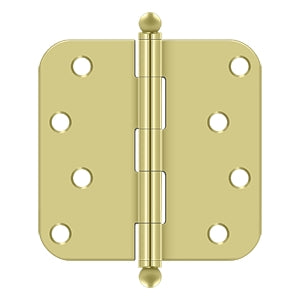
4" × 4" Ball Tip Steel Hinge
This traditional ball tip hinge combines a familiar butt-hinge configuration with a decorative rounded finial. The 4" × 4" size and 5/8" radius corners make it a useful option for many residential door applications.
View Ball Tip HingeHow to Choose the Correct Hinge Size
Hinge size is one of the most important details to get right. A hinge that is too small may not provide the support required by a heavy door, while a hinge that is substantially larger than the original can look out of proportion.
For replacement work, the existing hinge is your best starting point. Remove one hinge if possible and measure it rather than relying solely on the dimensions of the door.
| Measurement | What to Measure | Why It Matters |
|---|---|---|
| Height | Overall height of the hinge leaf when closed | Helps match the original hinge proportions and mortise. |
| Width | Overall width of the open hinge | Determines how much surface area each leaf occupies. |
| Corner Radius | Square or rounded corners and the radius of the curve | Important when replacing an existing mortised hinge. |
| Screw Pattern | Number and location of screw holes | Can affect whether existing holes can be reused. |
| Finial | Flat, ball, acorn, steeple, ornate, etc. | Determines the decorative character of the hinge. |
- The existing hinge height and width
- Whether the corners are square or radius
- The approximate door weight
- The number of hinges currently installed
- The screw-hole configuration
- The hinge finish
- Whether the hinge is plain or decorative
- Whether the existing hinge is mortised into the door and jamb
Square Corners vs. Radius Corners
This is one of the easiest details to overlook when ordering replacement hinges.
A square-corner hinge has four relatively sharp corners, while a radius-corner hinge has rounded corners. If the original hinge was mortised into the door and frame, the corner profile can affect how neatly the replacement fits the existing recess.
A radius hinge can sometimes be installed in a square mortise with modification, but that does not mean it is the best choice. For a restoration project, matching the existing configuration usually produces the cleanest result and minimizes unnecessary alteration to historic material.
Decorative Hinges and Period-Correct Design
Decorative hinges can be particularly effective when restoring an older home because they reinforce the architectural language already present in the room.
Consider a Victorian interior with detailed trim, carved millwork, patterned wallpaper, and ornate glass. A completely plain contemporary hinge may function perfectly, but it contributes very little visually. A hinge with a ball, acorn, urn, steeple, or ornate finial can feel much more intentional.
This does not mean every historic home needs an ornate hinge. In fact, over-decoration can be just as distracting as using hardware that is too modern. The goal is to match the level of detail already present.
Choosing the Right Finish
Finish is another detail that can dramatically change the appearance of a hinge. Antique brass, polished brass, oil rubbed bronze, nickel, and other finishes each create a different visual relationship with the surrounding woodwork and hardware.
When replacing only the hinges, matching the existing door hardware is usually the safest approach. If you are replacing an entire hardware suite, however, the hinge can become part of a broader finish strategy.
For example, a traditional brass doorknob paired with an appropriately finished brass hinge tends to look more cohesive than mixing unrelated metals without a deliberate reason.
Should You Restore or Replace Old Door Hinges?
Not every old hinge needs to be replaced. If the original hardware is structurally sound, properly sized, and appropriate to the period, restoration may be the better choice.
Start by inspecting the hinge for excessive wear, loose knuckles, damaged screws, bent leaves, corrosion, or evidence that the hinge is allowing the door to sag.
Surface dirt and oxidation are not necessarily signs that a hinge has reached the end of its useful life. In many cases, careful cleaning and lubrication can improve operation without sacrificing the character of the original hardware.
When replacement makes more sense
- The hinge is badly bent or structurally damaged.
- The hinge is causing the door to sag or bind.
- The original hinge is missing.
- Previous modifications have damaged the hinge or mortise.
- The existing hardware is an inappropriate modern replacement.
- You need additional load capacity for a heavier door.
When replacing an original hinge, document its dimensions and screw pattern before removing all of the hardware. That information can save considerable time later.
Ball-Bearing Hinges for Heavier Doors
Not every restoration calls for a purely decorative hinge. Large, solid-core, exterior, or otherwise heavy doors may benefit from ball-bearing construction.
Ball-bearing hinges use bearings within the knuckle to reduce friction and provide smooth movement. They are available in traditional proportions and finishes, allowing you to combine modern performance characteristics with a classic appearance.
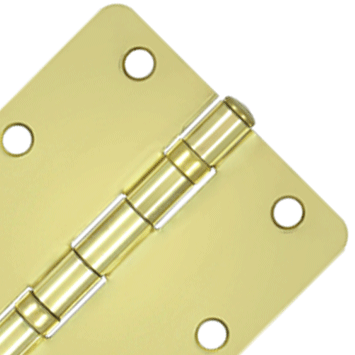
Traditional Style with Ball-Bearing Performance
For substantial doors, consider a heavy-duty ball-bearing hinge. Some traditional designs also allow interchangeable finials, providing a useful balance between performance and decorative detailing.
View Ball-Bearing HingeHow Many Hinges Does a Door Need?
The number of hinges required depends on the door's size, weight, construction, and hardware specifications. Many standard interior doors use two or three hinges, while taller or heavier doors may require additional support.
If you are replacing an existing installation, keeping the same number of hinges is generally the simplest starting point. For a new door, particularly a large solid-wood door, it is worth considering the manufacturer's recommendations and the weight of the door rather than choosing hinges based solely on appearance.
Installation Tips for Antique-Style Door Hinges
Good installation matters just as much as selecting the right hinge. Even a beautiful set of decorative hinges will not perform correctly if the leaves are improperly aligned or the screws are inadequately supported.
- Confirm the hinge size. Compare the new hinge with the existing hardware before cutting or modifying anything.
- Check the mortise. Make sure the hinge leaf sits correctly within the recess and does not stand proud of the surrounding surface.
- Use appropriate screws. The screws should be long enough and suitable for the door and frame material.
- Keep the hinge leaves aligned. Misalignment can cause binding and unnecessary stress on the hinge.
- Test the door before final tightening. Open and close the door several times to check for rubbing, sagging, or resistance.
Common Mistakes Homeowners Make
Choosing by Appearance Alone
A hinge can look perfect in a photograph and still be the wrong size or configuration for the door. Confirm the measurements first.
Ignoring the Corner Radius
Square and radius corners are not interchangeable details when working with existing mortises.
Forgetting Door Weight
A decorative hinge needs to be structurally appropriate for the door. Heavy doors may call for ball-bearing construction.
Mixing Styles Without a Plan
A heavily ornate hinge can look out of place on minimalist architecture. Decorative hardware works best when it relates to the surrounding details.
Antique Door Hinges: A Quick Buying Guide
| If You Need... | Consider... |
|---|---|
| A traditional replacement | Standard butt hinges matched to the original dimensions. |
| A more decorative appearance | Ball tip or decorative finial hinges. |
| Victorian character | Ornate, steeple, acorn, urn, or other period-inspired finials. |
| Support for a heavy door | Ball-bearing hinges in an appropriate size. |
| A seamless restoration | A hinge matching the original size, corner profile, finish, and screw configuration. |
Frequently Asked Questions
What are antique door hinges?
Antique door hinges are hinges designed in traditional or period-inspired styles. They may feature classic proportions, decorative finials, traditional finishes, or construction details associated with historic hardware.
What is the difference between a butt hinge and a ball tip hinge?
A butt hinge describes the basic hinge configuration, while a ball tip hinge describes a decorative finial at the end of the hinge barrel. A ball tip hinge can therefore also be a butt hinge.
Are decorative hinges functional?
Yes. Decorative hinges can perform the same basic function as traditional butt hinges, provided the hinge is properly sized and rated for the door.
What size hinge should I use for my door?
The correct size depends on the door's dimensions, weight, construction, and existing hinge configuration. For replacement projects, measuring the original hinge is usually the best place to start.
Can I use antique-style hinges on a new door?
Absolutely. Antique-style and decorative hinges are often used on new doors when homeowners want traditional character without using salvaged hardware.
The Right Hinge Finishes the Door
A beautiful door is made up of more than the slab, panels, glass, or molding. The smaller details are what complete the design, and hinges are one of those details that can easily be overlooked until they are wrong.
Whether your project calls for straightforward butt hinges, distinctive ball tip hinges, or elaborate decorative hinges, start with the practical requirements first: size, construction, door weight, corner profile, and installation method. From there, the decorative decisions become much easier.
For historic restoration, matching the existing hardware is often the most convincing approach. For new construction, decorative hinges give you more freedom to introduce architectural character from the outset.
Give Your Doors the Detail They Deserve
Explore traditional and Victorian-inspired hinges in a range of sizes, finishes, and decorative styles. Find the hinge that fits both the door and the character of your home.
Explore Decorative Door Hinges


Leave a comment